
From a very young age I rode horses, I loved and still do the power freedom and beauty of horses. Although I have an equine passion, connecting with their needs didn’t come naturally. My mom said “don’t ride in a saddle, you need to feel the horse and they need to feel you to form a bond”. I learnt to ride without a saddle better than riding with a saddle, yet the connection between my horse and me was rational. An exchange, a transaction.
Fast forward a few years….now I am attempting to develop a deeper level of construal in emotional and rational connection by embracing the expertise of becoming an elephant rider in my mission to Help People to Be Brilliant!.
What is an elephant rider?
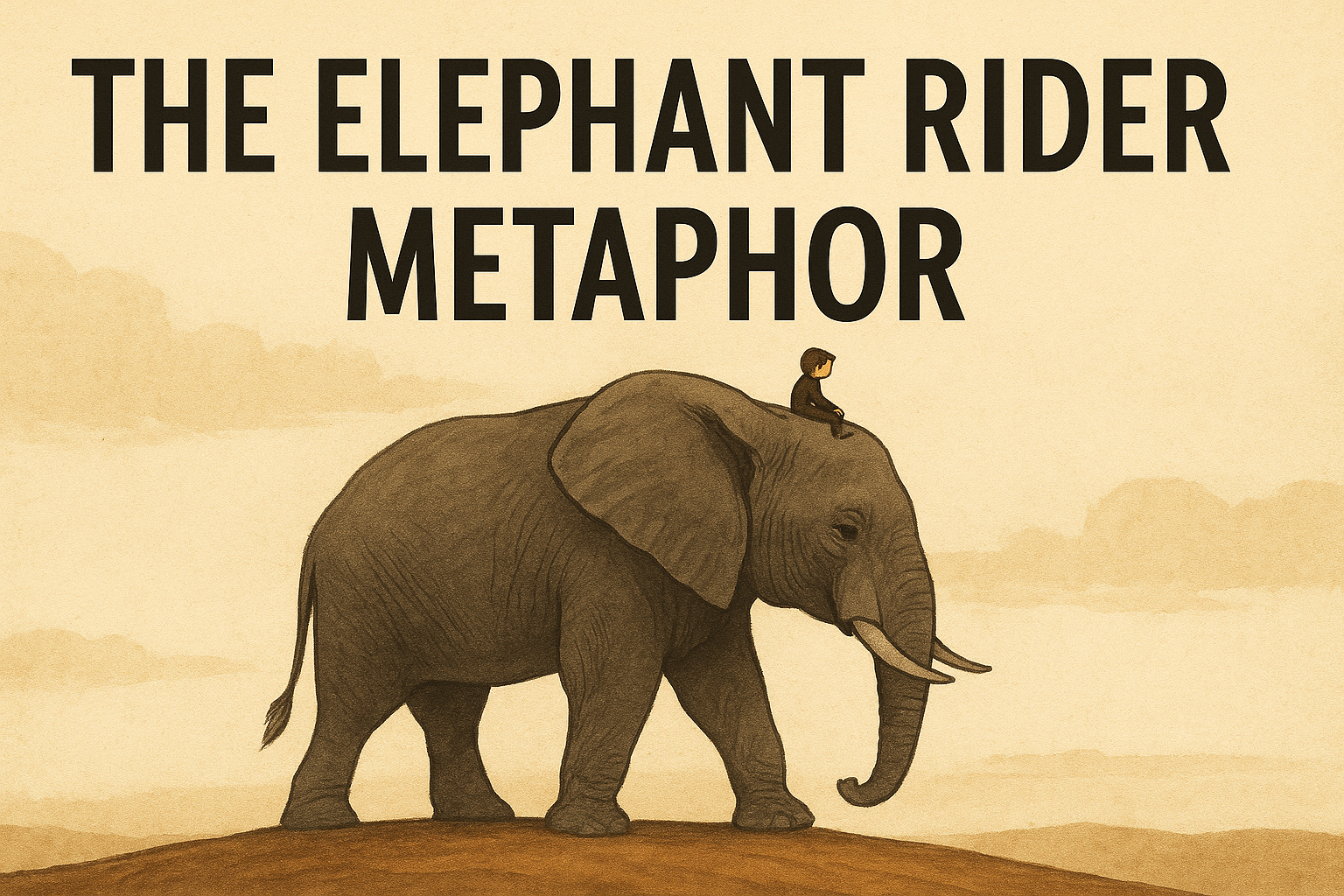
Jonathan Haidt’s introduced in his book “The Happiness Hypothesis,” a metaphor of an “Elephant Rider”. Used to explain the interplay between our emotional and rational minds. The elephant represents our emotional side – instinctive, powerful, and driven by feelings. The rider symbolizes our rational mind—analytical, logical, and capable of planning. Haidt suggests that the rider can guide the elephant, but only if they work together. When the two are in harmony, they can move effectively along the path.
However, if they disagree, the elephant’s sheer power often wins, leading to impulsive or emotionally driven actions. This theory highlights the importance of aligning our emotional motivations with our rational plans to achieve meaningful lasting behaviour change and connection. Not an exchange, not a transaction.
Why is this programme important to me and what will I doing?
From a young age, I questioned the status quo, seeking not just to fit in, but to improve and innovate. My approach to leadership has always been unconventional, challenging norms, and encouraging diverse perspectives. This often meant facing resistance and scepticism, but it also fuelled my determination to create environments where unique ideas could flourish and positive conflict is a key enabler. In my career, I’ve seen firsthand the transformative power of environments where individuals feel safe to express their thoughts, challenge ideas, and take risks without fear of retribution.
These psychologically safe spaces where true innovation happens and where real progress is made. Talking is good; listening is even better. But combining those with decisive action is where brilliance begins to emerge. This philosophy of mine aligns perfectly with the ECD (Emotional Culture Deck by riders&elephants) approach, which prioritises meaningful dialogue and impactful solutions.
To date, the ECD has complemented my focus on systemic team coaching, executive transitions, and vertical development, aligning with my passion for empowering teams and leaders to achieve their full potential. Over the past year, I’ve experimented with the ECD, working with both teams and leaders as they redefine their ‘Why’ and reset their course during and after disruption.
Embracing the Emotional Culture Deck (ECD)
For those who know me, “soft” and “fluffy” are not words that describe me. Believe me when I say nothing I do is “fluffy” or “soft.” When I talk about emotions, connection, and culture, I am referring to finding answers to serious questions and making real change happen.
The ECD is a powerful “tool” that fosters open, honest conversations about emotions, culture, and leadership within organisations. By prompting discussions around various emotions and experiences, it helps teams, leaders, and organisations better understand, navigate, and reset their workplace culture.
The ECD encourages moderate vulnerability, enhances empathy, drives change, and improves connection. It creates a platform where team members can openly discuss their emotions, build trust, and develop stronger relationships. Leaders can consider their collective leadership ethos and how they can lead the organisation together. By addressing cultural issues directly and facilitating bottom-up change, it contributes to a healthier and more supportive work environment. The deck’s simplicity and effectiveness in creating meaningful conversations and driving positive cultural change have made it an invaluable resource for teams and organisations. Now is the time for me to step up further – so last week, I took my first step on the ECD Certified Consultant Development Programme journey. A weeks intensive kicks off a years development where we explored the advanced application of the ECD for culture, leadership, transformation, stakeholder engagement, including customer and employee experience.
The ECD Certified Consultant Development Programme represents a convergence of my professional aspirations and personal values. It is a platform where I can continue to challenge norms, champion psychological safety, and support the development of leaders who think differently. By joining this programme, I aim to contribute to creating environments where individuals and teams can thrive, innovate, and make a lasting impact.
My aspiration is to develop others to ride elephant, guiding them to embrace their unique strengths and lead with authenticity and purpose. This is why I decided to join the ECD Certified Consultant Development Programme, and I am excited about the journey ahead.