

I recently wrote an article for HR Magazine about the importance of cultural alignment. In essence, cultural alignment is making sure you have the right people, doing the right thing, at the right time. Sounds great as a theory, right? Well, I truly believe it is. But I also understand that Rome wasn’t built in a day. Even the most robust theories can go out the window when facing the2024.
I understand the perceived difficulties of making time for work that isn’t client-facing. Never enough hours in the day, urgent meetings put in diaries. Firefighting. Precious little time to do the kind of strategic planning you really want to do but somehow everything else – work, life – gets in the way.
But you owe it to your team. You owe yourself the peace of mind that comes with knowing you’re well-prepared, and that your team understands instinctively what decisions need to be made without unnecessary input from you.
Imagine the certainty that you’ll have from knowing your precious employees are on message, purposeful, and trusted to do a great job.
t’s worthwhile spending the time and investment in yourself and indeed, your team, to ensure everyone is pulling in the right direction.
So how do you achieve this? How do you double your organisation’s brilliance through our existing employees? My systemic coaching pathway can help in spades.
Let me show you!
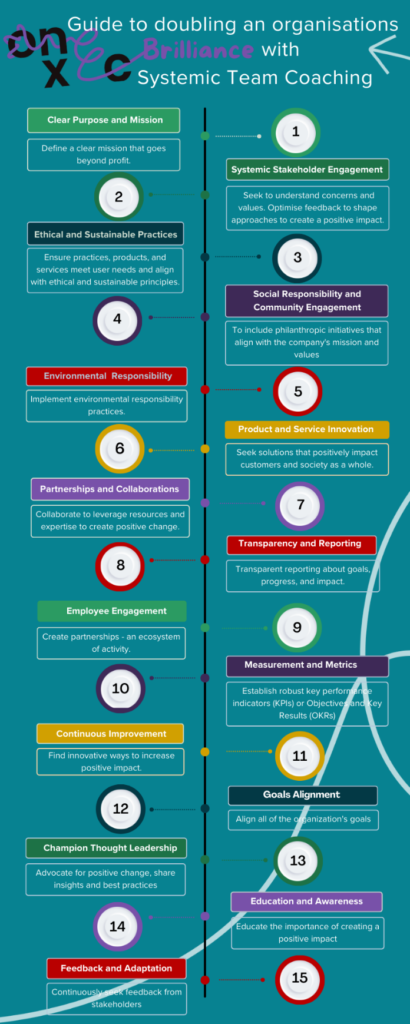
Clear purpose and mission
Attracting the right people is about more than just salaries these days. People want to feel an affinity with where they work and that their contribution matters.
Your purpose and mission should articulate clearly to your team the positive change the organisation aims to create in the world as a vital part of employee engagement. Ideas that are simple and easy to understand are more likely to be remembered. Cutting through complexity and focusing on the core message is crucial.
Your team are the best ambassadors for your organisation, so give them a reason to say positive things.
Engaging with stakeholders
Communicating your value is essential in any business.
And it’s important to be able to adapt that message for each individual stakeholder group, whether it’s your staff, customers and clients, suppliers, and the wider community.
What do your stakeholders care about? What are the things that worry them, the things that you can help solve?
What do you want them to come to you for, and how do you want to be perceived by them?
Getting coaching on how you and your team can look at these different stakeholder groups systemically is a very useful exercise. We need to understand their needs, concerns, and how we can utilise them.
ESG
Everyone knows they have to do ‘something’ on ESG these days – but greenwashing simply isn’t going to… wash.
A brilliant organisation is ethical and sustainable. It has a responsibility towards the environment and becoming as sustainable as possible. It supports external causes and initiatives that align with its values.
But this can seem an overwhelming undertaking. Having a coach to bounce ideas off can be really helpful to get a sense of what might work, and what new and emerging initiatives could be implemented in your company.
And don’t forget about transparency and reporting. Your public reputation is more important than ever; people are rightly cynical about any company that seems too good to be true. Talk to your coach about how to report on your impact, and progress against your goals and values.
Products and services
What is your current offering? Do you have a sense of what your customers’ needs are, and how they are changing? Could you partner up with another organisation to improve your existing service line?
Your team could always use new expertise as the demands of clients evolve with the times. Covid showed us like never before that adapting quickly and efficiently and being open to working in new ways is a vital part of modern business.
Expert educators
Champion thought leadership in your organisation.
You are the leading expert in something – and you mustn’t be afraid to shout about it. No fence sitting here! Your coach can guide you, using your goals and values, on what you should prioritise in 2024 when it comes to putting together a thought leadership strategy, whether that’s using your own channels (your website) or social media. You can always engage a communications expert if you want to go via traditional media channels, too.
When you have pitch meetings with prospective customers or clients, being able to demonstrate your nous and impact in a particular field in a very genuine way can make the sales process much easier.
Feedback
Don’t be afraid of feedback – be grateful for it.
Listen to what your stakeholders tell you and listen with intent to improve. Your coach can be a really useful resource in what to do with your feedback, and how to implement positive change in your organisation.
And that, in a nutshell, is it! I hope you have found some inspiration in my guide to being brilliant – and I’d love to talk to you about your goals for this year and how I can help you achieve them.
I’m available for all your brilliance needs – juliett@onexec.com